In twenty-plus years of plumbing in this part of Southern California, one factor shows up in more service calls than almost any other, and most homeowners have no idea it is the underlying cause. Hard water. It is not dramatic the way a burst pipe is dramatic. It works slowly, invisibly, and by the time you notice it, you are usually looking at a water heater that died five years early, a showerhead that barely trickles, or pipes with so much scale built up inside that flow is genuinely restricted.
This article covers what hard water actually is, what the local numbers look like, what it does to the specific components in your home, and what actually helps versus what is marketing noise.

What hard water means, specifically
Water hardness is a measure of dissolved minerals, primarily calcium and magnesium, that the water picks up as it moves through rock and soil before reaching treatment facilities. It is measured in parts per million (ppm) or grains per gallon (gpg). The U.S. Geological Survey classifies water above 180 ppm as very hard. The EPA does not regulate hardness as a health contaminant, which is why water utilities report it but are not required to treat it.
Ventura County's water supply comes from a combination of groundwater, the State Water Project, and local surface sources managed by Ventura County Waterworks. Groundwater in this region tends to run significantly harder than surface water, and depending on your neighborhood and the time of year, your supply may be drawing from different blends. The practical result: most homes in the county sit between 250 and 400 ppm on a regular basis, putting them well into the "very hard" classification for most of the year.
Local baseline: For reference, the EPA's secondary drinking water guidance treats anything above 120 ppm as moderately hard. At 300 ppm, you are running more than twice that threshold. Most households in the county deal with this every day without knowing it has a name.
The hardness spectrum: where Ventura sits
| Classification | ppm Range | Grains per Gallon | What you typically see |
|---|---|---|---|
| Soft | 0–60 ppm | 0–3.5 gpg | Little to no mineral buildup |
| Moderately hard | 61–120 ppm | 3.5–7 gpg | Some spotting on glass and fixtures |
| Hard | 121–180 ppm | 7–10.5 gpg | Scale starts forming on heating elements |
| Very hard | 181–300 ppm | 10.5–17.5 gpg | Significant appliance impact, visible deposits |
| Ventura County (typical) | 250–400 ppm | 14.6–23.4 gpg | Active scale on heaters, restricted showerheads, shortened appliance life |
What it actually does to your home
The damage is not random. Hard water attacks specific components in a specific order, and once you understand the pattern, the service calls start making a lot more sense.
Water heaters take the hardest hit
Your water heater is the biggest target because it is where your water sits at high temperature for extended periods. Heat accelerates mineral precipitation: the calcium and magnesium that stay dissolved in cold water drop out of solution when heated and settle as a hard, chalky layer on the tank bottom and, more critically, directly on the heating element in electric units.
The acoustic result is the popping or rumbling noise you may have noticed from your tank. That is not normal aging. It is water trapped under a layer of sediment, vaporizing and forcing its way through. The functional result is an element working much harder to transfer heat through an insulating crust, running longer, drawing more energy, and failing earlier. A tank water heater that should last 10 to 12 years in a soft-water area commonly lasts 6 to 8 years here without maintenance. A tankless unit, while more efficient overall, has a heat exchanger that is equally vulnerable to scale and more expensive to replace.
Warning signs specific to hard water heater damage: rumbling or popping sounds during heating cycles; longer recovery times after heavy use; rusty or discolored hot water (the anode rod is losing the scale battle); hot water that smells faintly metallic or sulfuric. Any one of these warrants a flush and inspection.
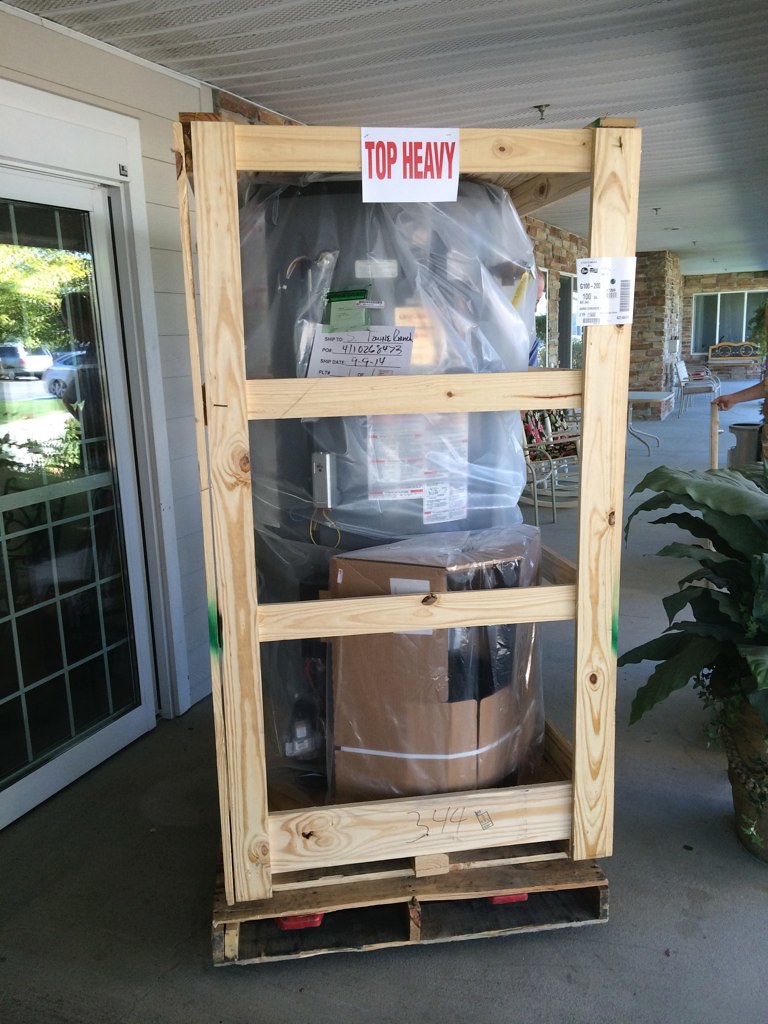
New water heater installations are more common in Ventura County than they should be, largely because the units never get flushed. Annual maintenance can add years to the lifespan.
Pipes and fittings
Scale builds up on the inside walls of pipes over years, gradually narrowing the effective diameter. In copper and older galvanized steel supply lines, this process is slow but cumulative. You may not notice reduced pressure at the tap for a decade, by which point the restriction is significant and localized cleaning is rarely practical. The more immediate problem shows up at the joints, valves, and fittings. Scale deposits can hold valves partially open or closed, make shutoff valves seize up so they cannot be operated in an emergency, and cause compression fittings to fail prematurely because the mineral buildup creates an uneven seating surface.
This is why older homes in Midtown and the neighborhoods around downtown, many with original copper installed in the 1960s and 1970s, start showing slow pressure decline not from pipe damage but from 50-plus years of mineral accumulation on the interior walls.
Fixtures and appliances
The most visible damage shows up on showerheads, aerators, and dishwasher spray arms. The small orifices these components rely on are the first to clog with scale. A showerhead that was fine two years ago and now sprays sideways has almost certainly got mineral buildup in several nozzles. The fix is simple, but it is a symptom of a larger process happening throughout the system. Clothes washers and dishwashers in hard water households also use more detergent less effectively and build up deposits in their internal components, shortening their service life.
A Midtown homeowner, ten years of hard water
A homeowner on Poli Street calls us about a water heater that has been making noise for two years and now only provides about 20 minutes of hot water. The unit is nine years old. When we drain the tank, we pull out roughly two inches of compacted sediment off the bottom. The lower heating element is almost completely fused to the scale layer. The unit is salvageable with a new element, a full flush, and an anode rod replacement, but the efficiency loss from years of accumulated sediment means the owner has been paying higher electricity costs the whole time. A routine annual flush from year one would have extended the unit's life by at least three to four years and kept energy costs where they should be.
Illustrative example. Specific outcomes vary based on equipment age, water source, and maintenance history. Prior results do not guarantee similar outcomes.
What actually helps
There is a spectrum of solutions from simple habits to whole-home systems, and the right answer depends on the severity of your water and what you are trying to protect.
Annual water heater flush
This is the single highest-return maintenance task for homes in this county. It takes about an hour, costs less than a hundred dollars with a plumber, and can realistically add three to five years to your water heater's life. You are flushing out the accumulated sediment before it has a chance to bake onto the heating element. On tankless systems, an annual descale with a citric acid flush through the heat exchanger does the same job. If your unit has never been flushed and is more than four years old, do it this year regardless. If there is already heavy sediment, a plumber can assess whether one flush is enough or whether the unit has been compromised.
Showerhead and aerator cleaning
Soaking in white vinegar overnight dissolves the calcium deposits in showerhead nozzles and aerator screens. This is a free fix that restores flow and is worth doing annually. It does not address what is happening inside the pipes or the water heater, but it keeps the visible symptoms manageable.
Point-of-use filtration
Under-sink filters and inline filters at the refrigerator line treat the water at the point of use. They do not affect your water heater or your shower, but they improve taste and protect appliances like ice makers that have small internal components vulnerable to scale. Useful but limited in scope.
Whole-home water softeners
A salt-based ion exchange softener replaces the calcium and magnesium ions in the water with sodium ions before the water reaches any of your home's plumbing. It is the most comprehensive solution and genuinely prevents the scale buildup that causes every problem described above. At 300-plus ppm, a whole-home softener makes a meaningful difference to both maintenance costs and appliance lifespans. The realistic investment is $800 to $2,500 for the unit plus installation, depending on the home's size and the system capacity needed.
The one caveat worth knowing: softeners prevent new scale but do not remove existing buildup. If your pipes or water heater already have significant deposits, softening the incoming water stops the problem from progressing but does not undo what is already there. That is where a plumber's assessment is useful: knowing whether you are dealing with a prevention situation or an existing-damage situation changes the approach.
Salt-free conditioning systems
Template-assisted crystallization (TAC) systems and similar "salt-free softeners" change the form of the minerals so they are less likely to stick to surfaces, without removing them from the water entirely. They are lower maintenance than salt-based systems and avoid the sodium addition. The research on their effectiveness is more limited than on conventional softeners, but for moderate hardness levels or households that prefer to avoid salt, they are a reasonable middle option.
What does not help (and gets sold anyway)
Magnetic conditioners and electronic descalers have been on the market for decades, making claims about altering the molecular structure of water to prevent scale. Independent studies have not consistently supported those claims at the scale and hardness levels common in this county. The EPA and USGS do not endorse them as water treatment methods. They are not harmful, but spending several hundred dollars on a device that may do nothing while your water heater continues to scale is a real cost. Save the money for an annual flush and a proper assessment of whether a softener makes sense for your home.
How to check your own water
Your water utility is required to publish an annual water quality report. For residents served by the City of Ventura, this is available through the City of Ventura water quality page. For county-served areas, Ventura County Waterworks publishes annual consumer confidence reports. Hardness is typically listed in either ppm or gpg. You can also buy a simple test strip kit at any hardware store for a few dollars, which gives you a quick baseline reading for your specific tap.
Common questions about hard water in Ventura County
The practical bottom line
Hard water is not a crisis. It is a slow, steady tax on your plumbing system that compounds over years. The good news is that it is almost entirely manageable with the right habits. An annual water heater flush costs very little relative to the replacement it prevents. Knowing your water hardness number takes fifteen minutes with a test strip. And if you are starting to hear sounds from your water heater, see reduced pressure in showers, or notice your hot water taking longer to recover, those are actionable signals rather than something to wait on.
We have been doing this work in the 805 since 2002. The homes that have the fewest expensive plumbing surprises are almost always the ones where someone is paying basic attention to the water heater and the fixtures. It is not complicated, and it pays off in a market where a water heater replacement plus installation is a $1,200 to $2,500 job that a $90 annual flush often makes unnecessary for years longer.
If you have questions about your specific system, or you want a plumber to take a look at what your hard water may have already done, we cover all of Ventura County and can usually schedule same-day. See our water heater service page for more on what we do, or reach us directly at the number below. Related reading: our pipe repair and repiping page covers what to expect if scale has already affected your supply lines.