We get this call constantly: a homeowner has a leak, a plumber fixed it, and eighteen months later there is a new leak two feet away. Nobody misled them. The repair was done correctly. What nobody told them is that the pipe itself, not just the spot that failed, was the actual problem, and a repair can only ever fix the spot in front of us.
This is the single most consequential decision in residential plumbing, and it is also the one homeowners have the least information to make. Below is the framework we actually use in the field: what the different pipe materials in Ventura County homes mean for how they fail, the warning signs that separate a one-off repair from a system in decline, real local cost ranges for both paths, and what a repipe actually involves if that is where you land.
What's actually running through your walls
The right call depends almost entirely on what material is failing, because different pipe materials fail in completely different ways. Here is what shows up most often in homes across the county, from oldest to newest.
| Material | Common era | How it fails | Repair or repipe? |
|---|---|---|---|
| Galvanized steel | Pre-1970 | Corrodes from the inside along the entire run, narrowing the bore and eventually perforating | Repipe. A patch stops one leak; the rest of the run is corroding at the same rate. |
| Cast iron (drain lines) | Pre-1970 | Scales and cracks internally, especially at joints and where roots intrude | Usually repipe or reline for drain runs with repeat backups; spot repair for a single cracked section is reasonable if the rest tests sound. |
| Copper (Type M/L) | 1960s–present | Pinhole leaks from age, water chemistry, or electrolysis, usually localized | Repair for an isolated pinhole. Repipe if multiple pinholes appear on the same run within a couple of years. |
| Polybutylene | Late 1970s–mid 1990s | Fittings and the pipe itself become brittle over time and fail without warning | Repipe. This material is a known long-term liability regardless of its current condition. |
| PEX | 2000s–present | Rare failures, usually at a fitting rather than the tubing itself | Repair. A fitting failure in a PEX system is almost never a sign of a system-wide problem. |
The core principle: a repair fixes the location. A repipe fixes the material. If the material is the problem, a string of repairs is really just a slow, expensive repipe with extra drywall bills along the way.
Signs a repair is genuinely the right call
Not every leak means your whole system is failing, and we are not in the business of selling a repipe to someone who needs a $200 fix. A repair is the honest answer when:
- The home is plumbed in copper or PEX and this is the first leak you've had in years.
- The failure is isolated to one fitting, one joint, or one section of pipe, and the rest of the system pressure-tests normally.
- The cause is identifiable and unlikely to recur, such as a nail through a wall during a remodel, or a single fitting that was never seated correctly.
- Water pressure and flow are normal throughout the rest of the house.
In these cases, a targeted pipe repair is the right amount of work for the problem in front of you, and there is no reason to spend more.
Signs you are past the point of patching
These point toward a repipe rather than another repair: a second or third leak on the same supply line within a year or two; galvanized or polybutylene pipe anywhere in the system; consistently low pressure throughout the whole house rather than at one fixture; rusty or discolored water on the cold side that does not clear after running; and a home built before 1970 that has never been repiped. Any one of these on its own is worth a professional assessment. Two or more together usually settle the question.
The pattern we see most in the county's older neighborhoods, the parts of town built before 1970 with original galvanized supply and cast iron drains, is homeowners paying for three or four repairs over several years that add up to more than a repipe would have cost, on a system that was never going to stop failing. Our leak detection service is often the first step here, because pinpointing exactly where and how often a system is failing is what turns a guess into a decision.
Two leaks, one winter, in a 1962 Ventura home
A homeowner calls in November about a leak behind the water heater. We repair the section of galvanized pipe that failed, a straightforward job. In February, a second leak turns up under the kitchen sink, on a different branch of the same original supply line. Both repairs were correctly done. The problem was never the two spots that failed, it was the other 90 percent of galvanized pipe running through the walls at the same age and the same rate of internal corrosion. At that point we walk the homeowner through a repipe quote rather than proposing a third repair, because the math has stopped favoring another patch.
Illustrative example. Specific outcomes vary based on home age, pipe material, and prior repair history. Prior results do not guarantee similar outcomes.
What each option actually costs in Ventura County
| Scope of work | Typical cost | What it addresses |
|---|---|---|
| Single-section repair | $150–$600 | One leak, one joint, or one damaged section |
| Partial repipe (one problem zone) | $1,500–$4,000 | Replumbing a bathroom, kitchen, or single problem branch |
| Whole-home repipe | $4,000–$15,000+ | Full supply line replacement with copper or PEX, sized to home and fixture count |
The spread on a whole-home repipe is wide because it depends on square footage, number of bathrooms and fixtures, whether the home has a crawlspace or is slab-on-grade, and whether copper or PEX is used. PEX is typically the more cost-effective choice for older homes with limited access, since it requires less demolition to route. Copper costs more but is a premium, code-approved material with a 50-plus year service life. We walk through both options and give an itemized quote before anything is cut into.
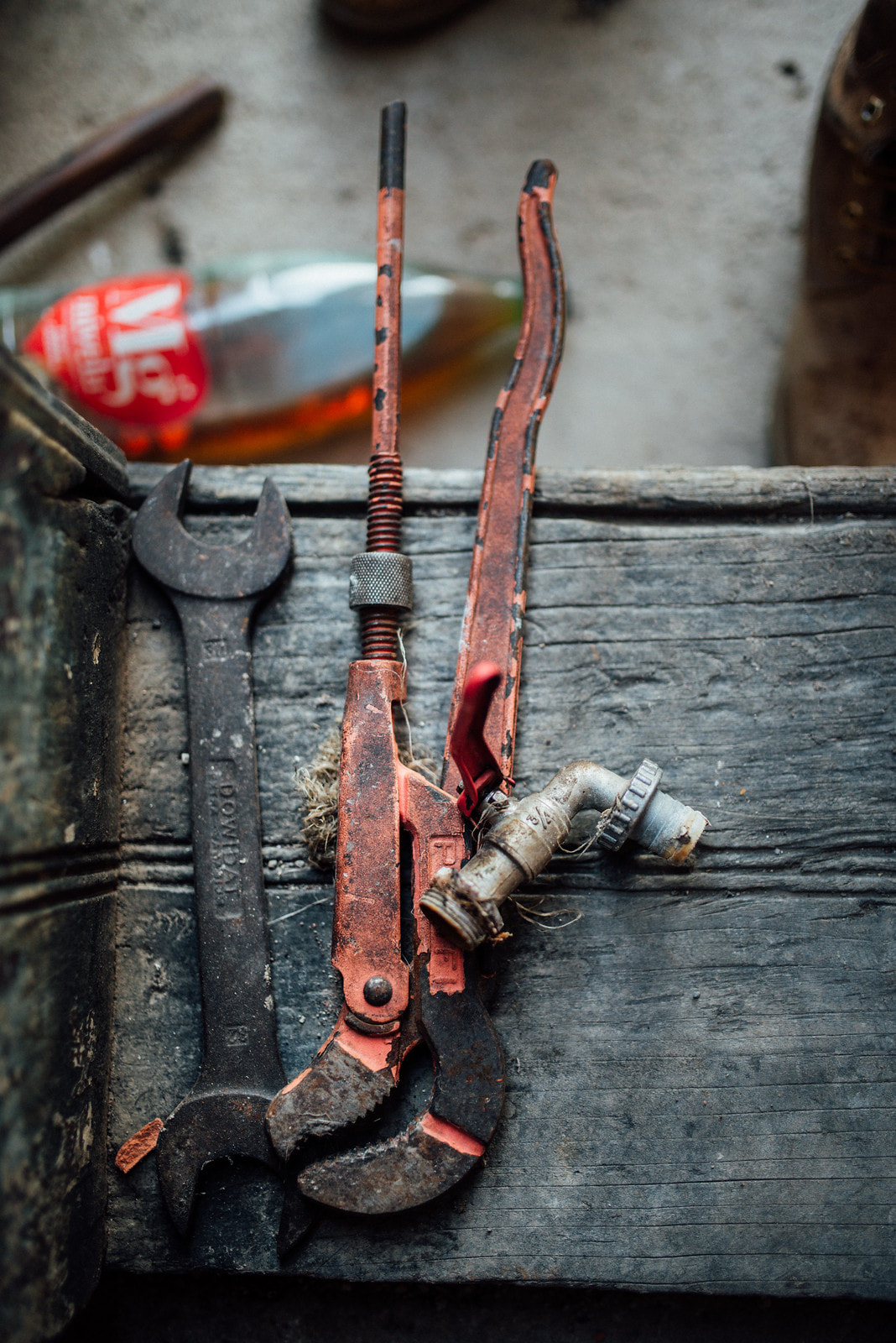
Original shutoff valves on pre-1980 galvanized systems often seize from decades of internal mineral buildup, one more reason a repipe includes new valves throughout.
What a whole-home repipe actually involves
A repipe is more disruptive than a repair, but less than most homeowners expect. Plan on one to four days for a typical single-family home, with water usually restored each evening so you are not without service overnight. The work requires opening walls at fixture locations, we make careful, targeted cuts rather than removing whole sections of drywall, and we can connect you with a trusted drywall contractor for patch and texture afterward. Whole-home repiping is permitted work through the City of Ventura building department, and as the licensed contractor, we handle the permit application and required inspections. That paperwork exists for a reason: it confirms the finished work meets code, including the 80 psi static pressure ceiling that trips up a lot of hillside homes when the old pressure regulator gets replaced along with everything else.
The middle ground: partial repipes
Whole-home isn't always the answer either. If a home has had all its problems concentrated in one bathroom or one addition, while the rest of the system is copper and has been trouble-free, replumbing just that zone can be the right-sized fix. This comes up often in homes that had a single addition built with a different pipe material than the original structure. The key is having a plumber actually trace the system rather than assuming uniformity, because "the house is old" is not the same statement as "the whole house is plumbed the same way."
The bottom line
A repair is the right call when a failure is isolated and the surrounding system is sound. A repipe is the right call when the material itself, not the specific spot that failed, is the actual problem. The mistake we see most often is treating every leak as an isolated event on a system that has already told you, through two or three prior repairs, that it is done. If you are on your second or third pipe repair in as many years, or you know your home still has original galvanized supply lines, that is worth an honest assessment rather than another patch. We serve homeowners across Oxnard, Santa Barbara, and the rest of the county, and we will tell you plainly which side of that line your home is on.
If you want a second opinion on a repair that already happened once, or you're staring down your second leak this year, call us and we'll walk the system with you before recommending anything.